
While most experimental searches for WIMP dark matter have come up empty, there is one experiment, known as DAMA, that has claimed to have detected dark matter, and no one has yet been able to confirm or refute the claim.
Read MoreThe Centre is pursuing several research avenues in its search for WIMP dark matter. The most mature of these is the SABRE experiment, though we are also pursuing research into other WIMP experiments in the research and development phase – including Cygnus and the low mass WIMP program.
Read MoreThe key features of a WIMP are that they are relatively heavy (with a mass anywhere from the mass of a proton to the mass of a heavy nucleus) and interact only feebly with ordinary matter.
Read More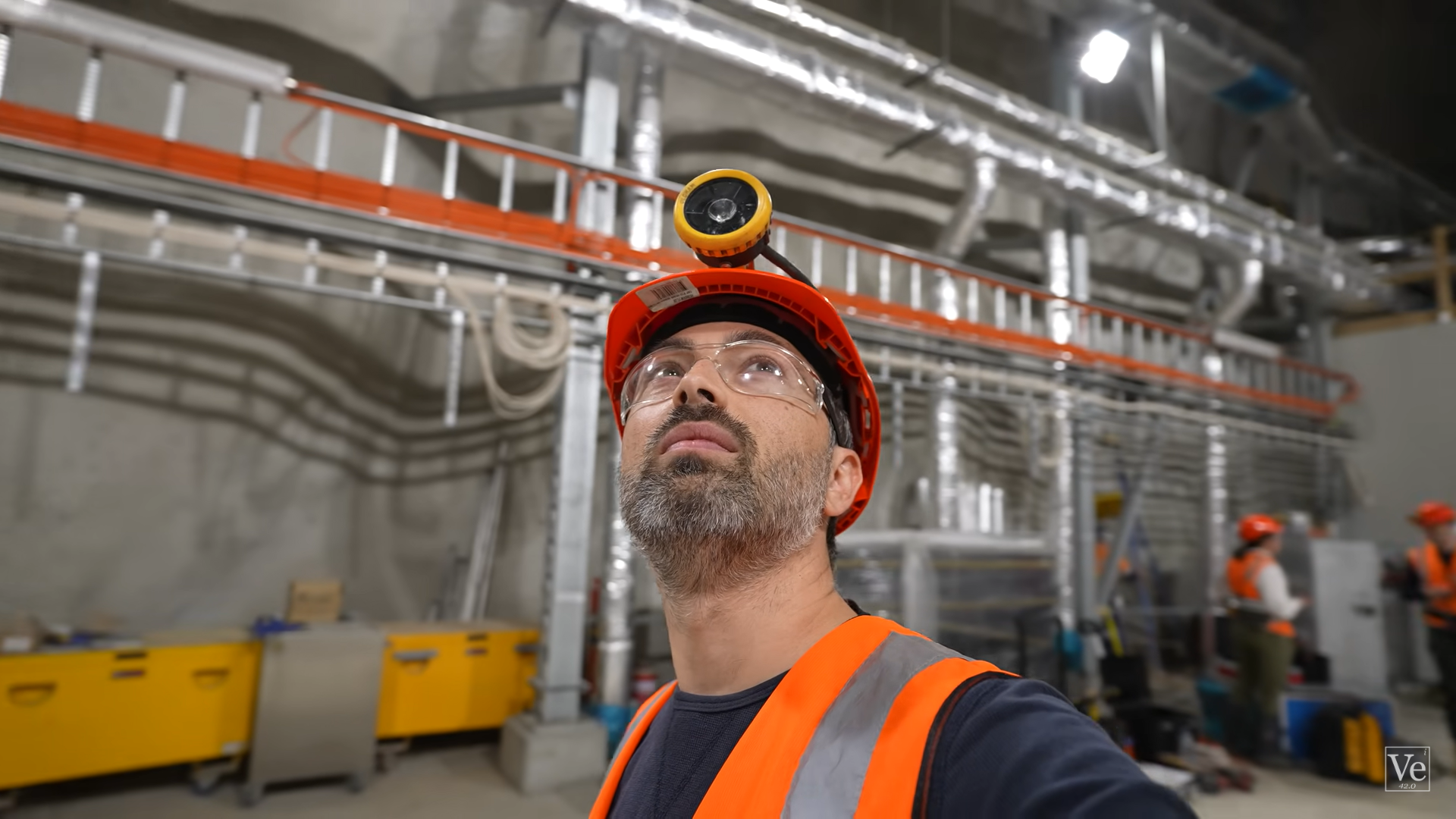
The team from Veritasium does a deep dive int dark matter and finds out how CDM researchers are going underground to find answers.
Read MoreCentre Authors: Barberio, E. L., Filmer, E., Jackson, P., Kong, A., McDonald, E., McNamara, P., Potti, H., Ruggeri, T., Scutti, F., Taylor, G., Ting, E., Urquijo, P., White, M.
Read More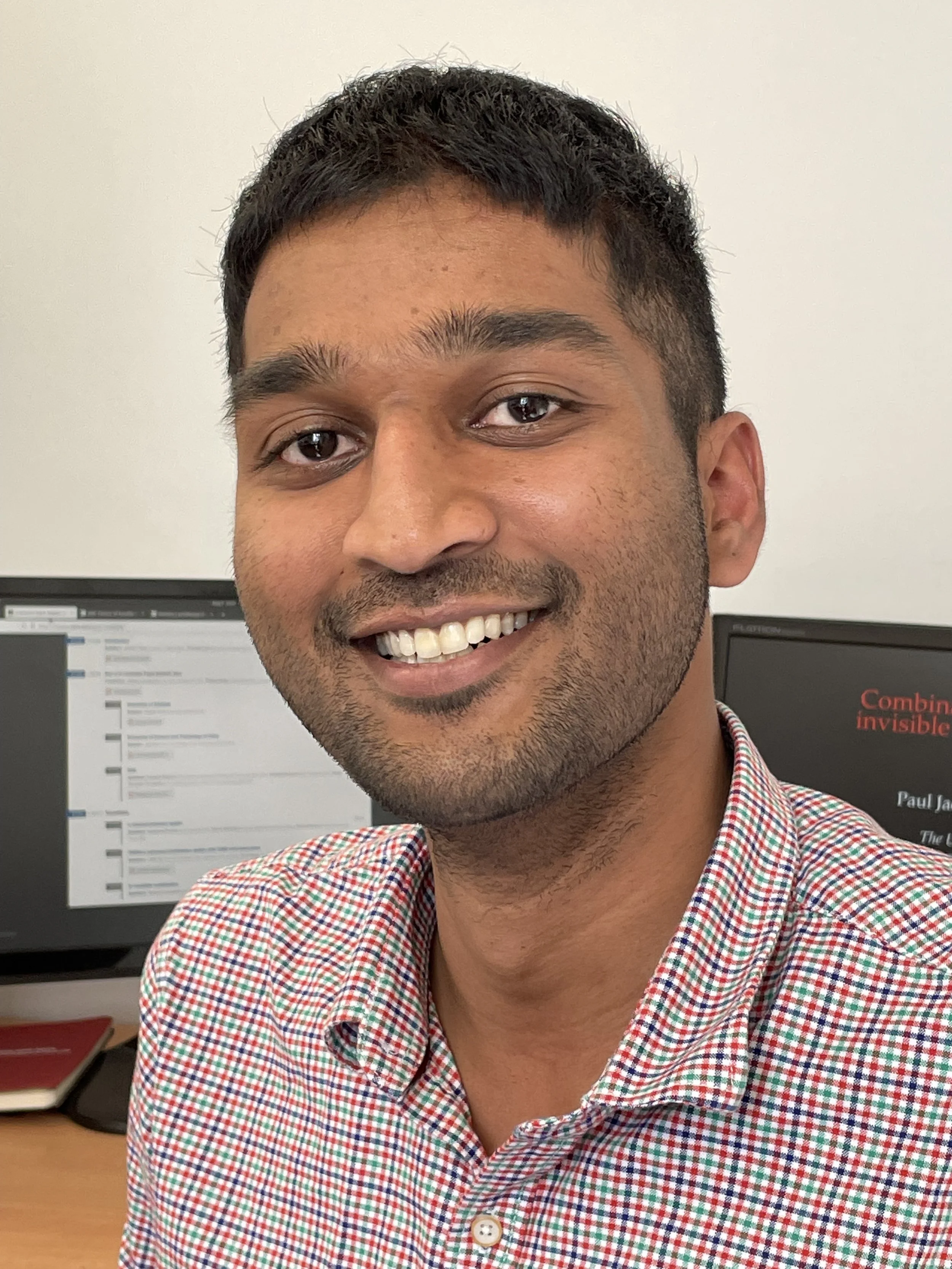
New ATLAS Early Career Scientist Board member , Harish Potti, talks about the board and how he aims to contribute.
Read More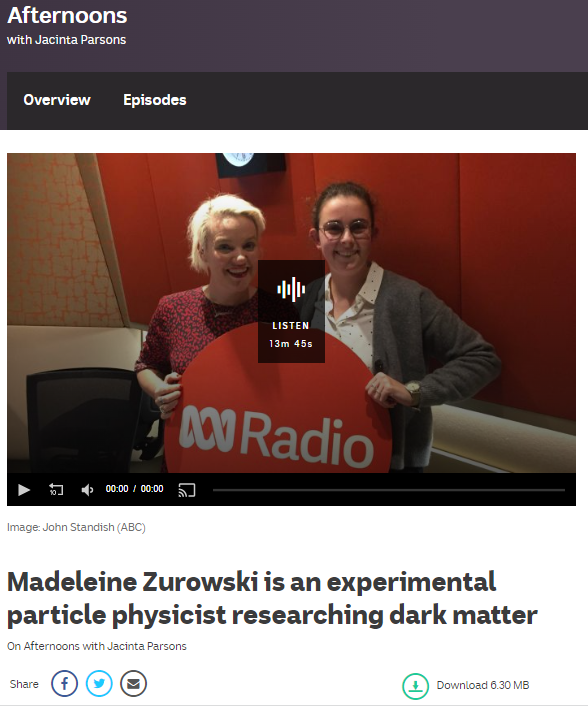
Centre PhD student Madeleine Zurowski was interviewed on ABC Afternoons by Jacinta Parsons about her ‘odd job’ searching for dark matter in a Stawell gold mine.
Read More
Applications are open for a PhD position at The University of Sydney, to conduct research in the field of direct dark matter detection. The scholarship is funded by the Australian Research Council (ARC) Grant No. DE220100225: "Unmasking dark matter, from the laboratory to the Milky Way".
Read More
The Asia Pacific Center for Theoretical Physics (APCTP) is offering new positions for the Young Scientist Training program at the postdoctoral fellow level in theoretical physics and related fields. The APCTP is an international center founded in 1996 with the first president, Professor C. N. Yang. We are pursuing the world-leading level of research in theoretical physics and the training of young scientists in the Asia-Pacific region.
Read More
The University of Adelaide is offering a continuing/tenure track Lecturer in experimental particle physics with emphasis on dark matter direct detection and beyond the standard model physics.
Read More
A career in physics can be competitive and demanding, so it would not be surprising for researchers to want to rest after a long day in the laboratory.
Read MoreCentre Authors: Bell, N., Newstead, J., Ritter, A.
Read More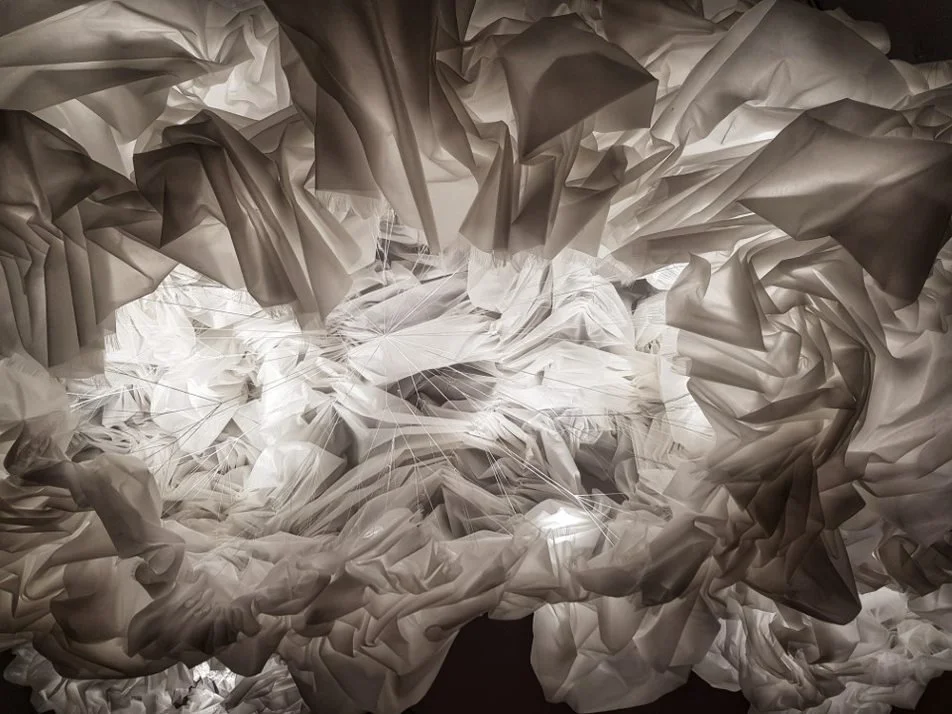
International Day of Light is a global initiative that provides an annual focal point for the continued appreciation of light and the role it plays in science, culture and art, education, and sustainable development, and in fields as diverse as medicine, communications, and energy.
Read More
Bill’s area of research is in dark matter and Beyond the Standard Model physics, particularly multi-component dark matter interpretations to direct detection experiments.
Read More
The SUPL Facility & Laboratory Manager will be responsible for the managing the operation of the overall SUPL facility, with a major focus on safety, coordination of occupancy and access to the facility, and maintaining a close working relationship with SGM.
Read MoreCentre Authors: Thomas, A. W., Wang, X.
Read MoreCentre Authors: Barberio, E. L., Jackson, P., Kong, A., McDonald, E., McNamara, P., Potti, H., Ruggeri, T., Scutti, F., Taylor, G., Ting, E., Urquijo, P., White, M.
Read More
Matthew Fewell is a PhD student at the University of Adelaide, researching rare events in proton-proton collisions using the ATLAS detector at the Large Hadron Collider at CERN.
Read More
Emily Filmer is studying upgrades to the ATLAS Detector, with a particular focus on the Inner Tracker Strip geometry, and Endcap module testing.
Read More
Jesper Leong’s research focuses on using QMC to describe the composition, structure and evolution of neutron stars. In addition, he is now applying the theory to describe the properties of finite nuclei in a hope of finding a more accurate explanation of how the elements of the periodic table behave.
Read More