Scientists will travel 7,000 kilometres over 19 days and visit 40 cities and towns across Australia on the National Quantum & Dark Matter Road Trip.
Read More
Scientists will travel 7,000 kilometres over 19 days and visit 40 cities and towns across Australia on the National Quantum & Dark Matter Road Trip.
Read MoreCentre Authors: Sengupta, D.
Read MoreCentre Authors: Barberio, E. L., Jackson, P., Kong, A., McDonald, E., McNamara, P., Potti, H., Ruggeri, T., Scutti, F., Taylor, G., Urquijo, P., White, M.
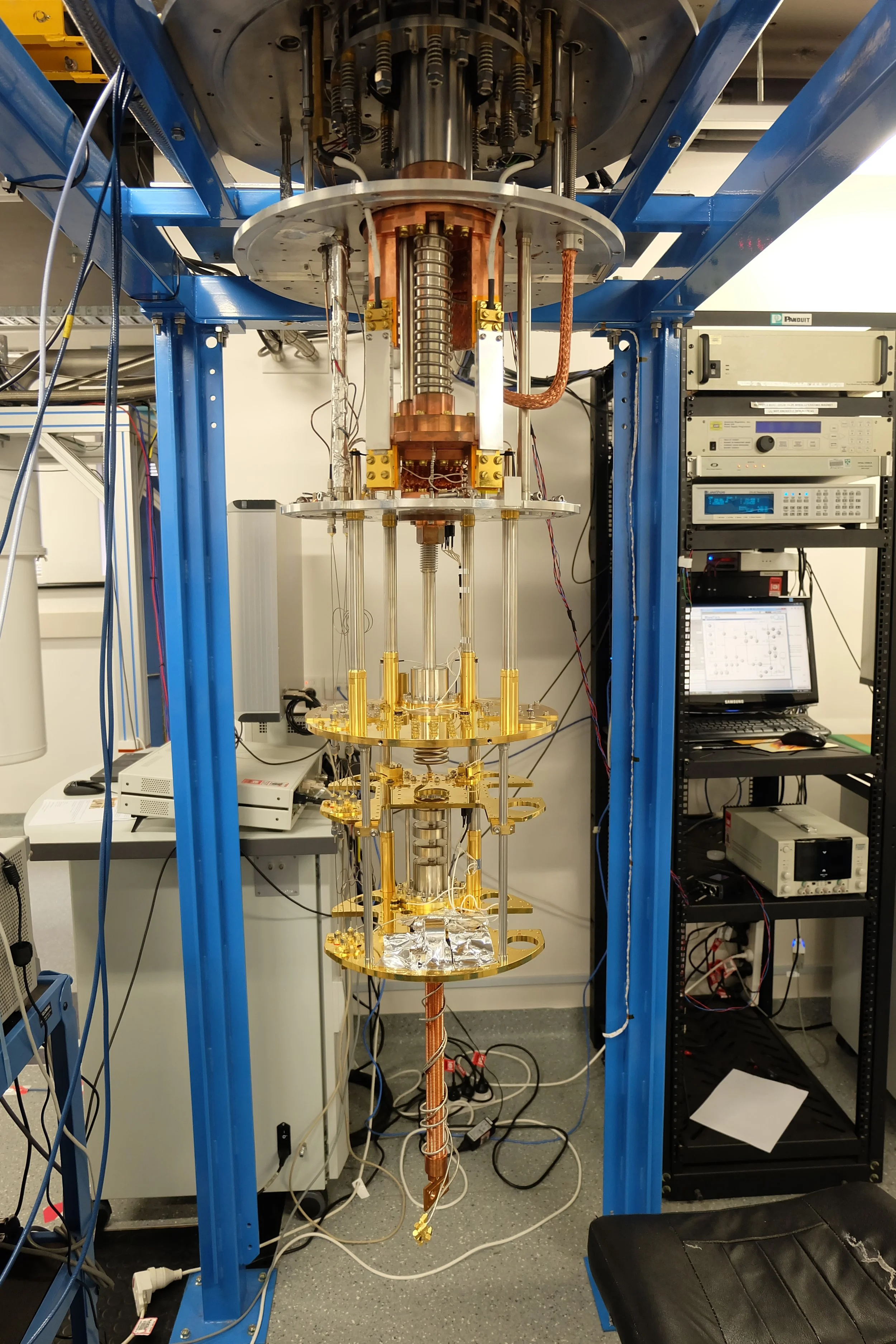
Read MoreThe ORGAN Experiment—Australia’s first major contribution to dark matter detection—is now fully online and searching for dark matter, bringing us a step closer to solving one of the biggest mysteries of the Universe.
Read MoreCentre Authors: Tobar, M., Goryachev, M., McAllister, B., Quiskamp, A., Ivanov, E., Altin, P.
Read MoreCentre Authors: Thomas, A. W., Williams, A. G., Wang, X.
Read MoreCentre Authors: Thomas, A. W.
Read MoreCentre members William Melbourne, Zuzana Slavkovska and Ferdos Dastgiri travelled to the INFN node at LNGS (Laboratori Nazionali del Gran Sasso) to collaborate with the Dark Matter Centre’s partners, Ambra Mariani, Chiara Vignoli and Giuseppe DiCarlo between April 19 and May 5.
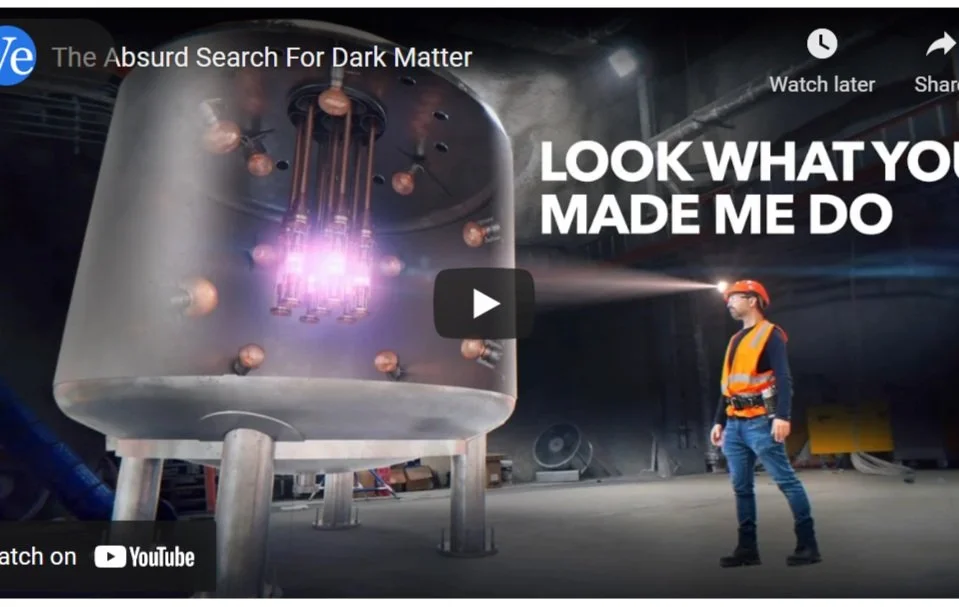
Read MoreThe Centre was lucky enough to have the opportunity to host the Veritasium team at its University of Melbourne laboratory, Swinburne University of Technology Wantirna Campus and the Stawell Underground Physics Laboratory.
Read MoreCentre Authors: Owa, S., Thomas, A. W., Wang, X.
Read MoreCentre Authors: Owa, S., Thomas, A. W., Wang, X.
Read MoreThe Centre’s main effort in WISP detection is what is known as The Oscillating Resonant Group AxioN Experiment, or ORGAN for short
Read MoreWISPs are similar to WIMPs in some ways – e.g. they don’t interact very much at all with regular matter – but their key distinction is that they are very light in comparison.
Read MoreWhile SABRE looks to search for WIMPs in the traditional mass range – that is to say 10s to 100s of times as heavy as a proton – it is also possible that WIMPs are lighter, perhaps a fraction of the mass of a proton.
Read MoreThe WIMP search has spawned numerous innovations in particle detector technology. To give a sense of the rapid rate of progress, the experimental sensitivity to WIMPs over the last two decades has increased more quickly than computer speeds (as described by ‘Moore’s Law’) during the 80s to 00s.
Read MoreWhile most experimental searches for WIMP dark matter have come up empty, there is one experiment, known as DAMA, that has claimed to have detected dark matter, and no one has yet been able to confirm or refute the claim.
Read MoreThe Centre is pursuing several research avenues in its search for WIMP dark matter. The most mature of these is the SABRE experiment, though we are also pursuing research into other WIMP experiments in the research and development phase – including Cygnus and the low mass WIMP program.
Read MoreThe key features of a WIMP are that they are relatively heavy (with a mass anywhere from the mass of a proton to the mass of a heavy nucleus) and interact only feebly with ordinary matter.
Read MoreThe team from Veritasium does a deep dive int dark matter and finds out how CDM researchers are going underground to find answers.
Read MoreCentre Authors: Barberio, E. L., Filmer, E., Jackson, P., Kong, A., McDonald, E., McNamara, P., Potti, H., Ruggeri, T., Scutti, F., Taylor, G., Ting, E., Urquijo, P., White, M.
Read More