
Making Dark Matter Come to Light
* UPDATE - Winners announcement!
Congratulations to the winners of the high school student art competition. You will be notified next week and winning artworks will also be publicised on the Centre’s social media channels.
Thank you to everyone who submitted entries!
Y7-9 category
Joint winner - Tabitha (Wenona School)
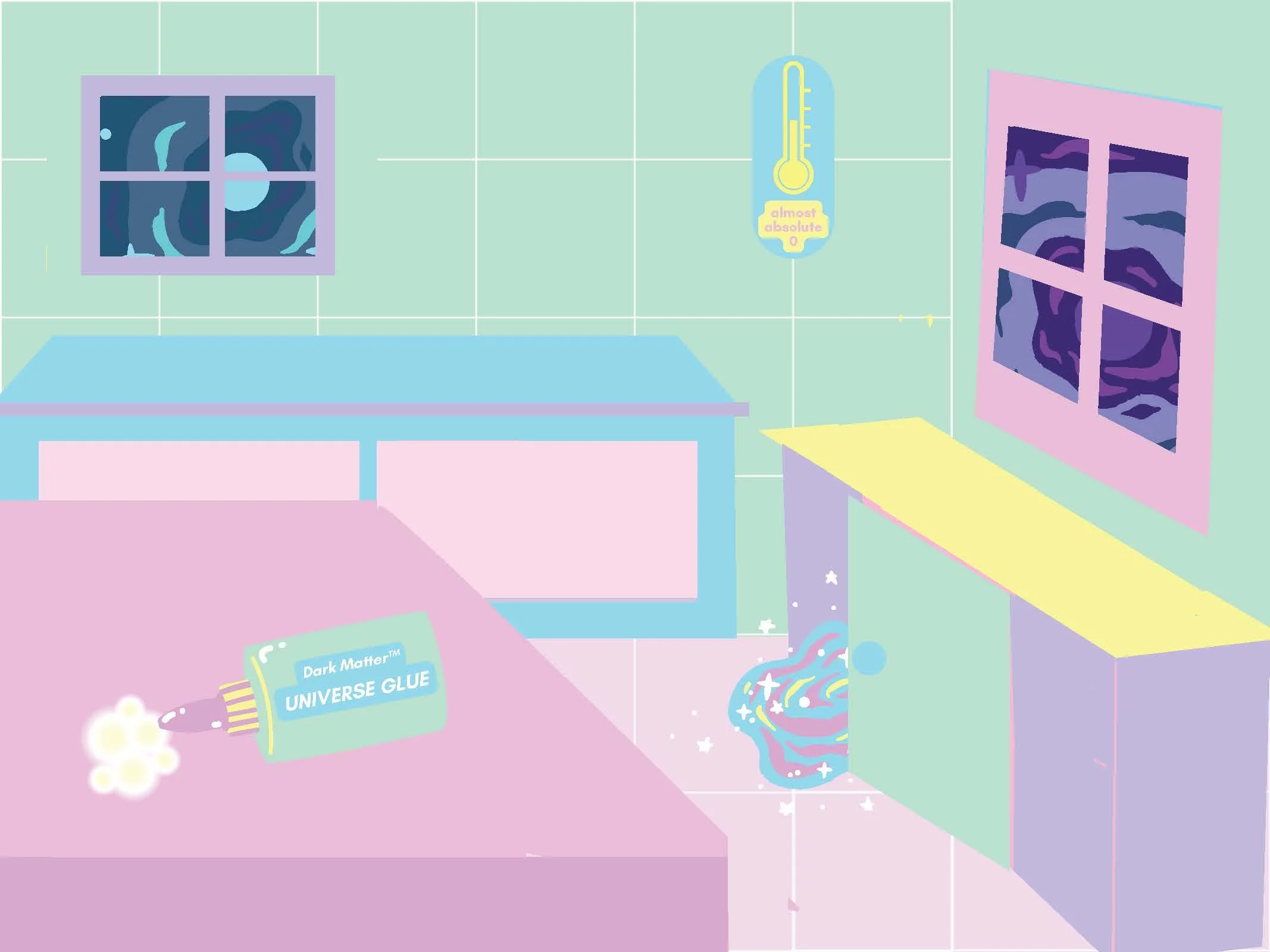
Universe Glue
If theories are correct and axions are related to dark matter, then when dark matter (the glue that holds the universe together) exists at temperatures that are only just above absolute zero (so that no other objects can emit light/heat), it will emit a very faint light.
Joint winner - Bethan (Wenona School)
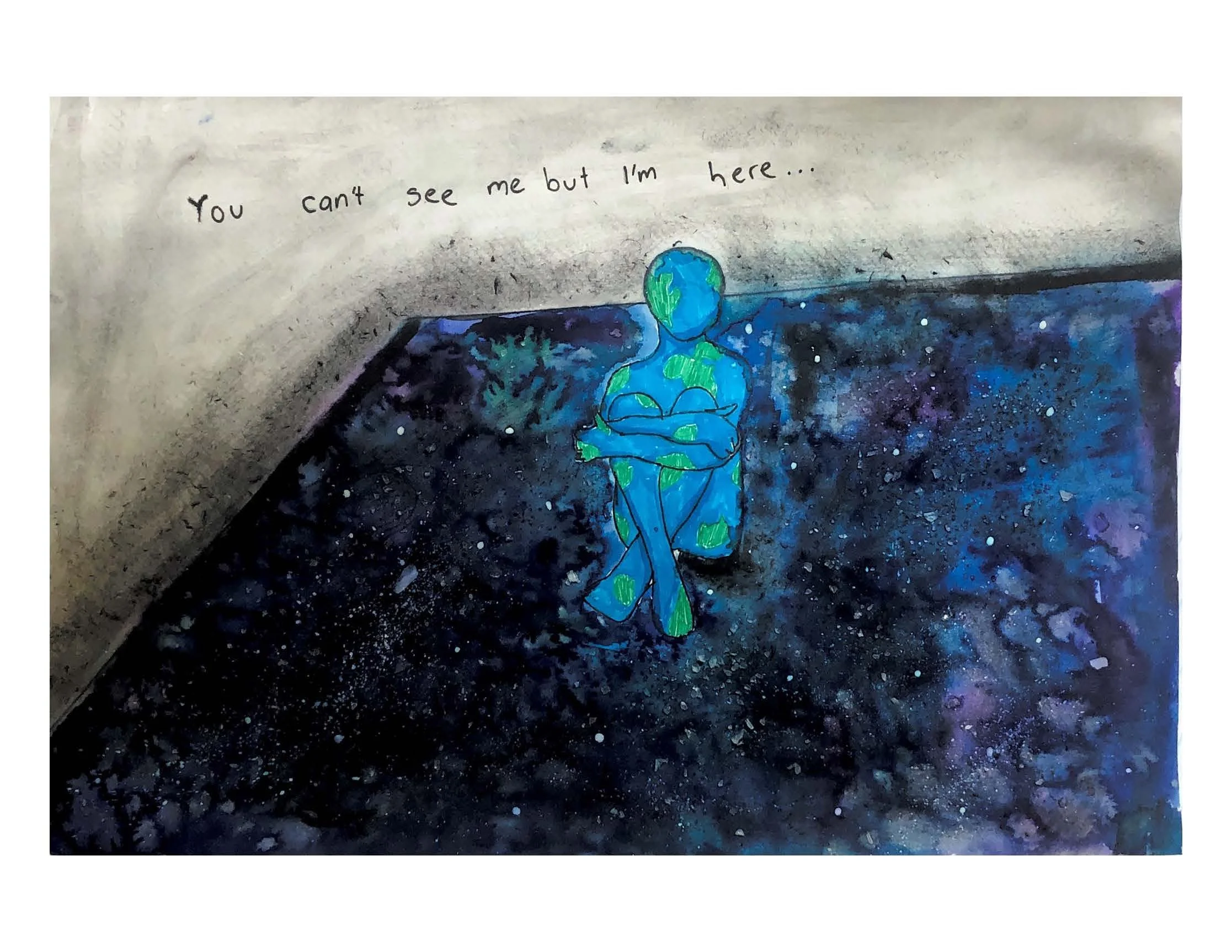
Noninteractive
My interpretation of dark matter is based on the premise that it is not immediately visible but encompasses a lot of the universe.
Y10-12 category
Winner - Yifei (Burgmann Anglican School)
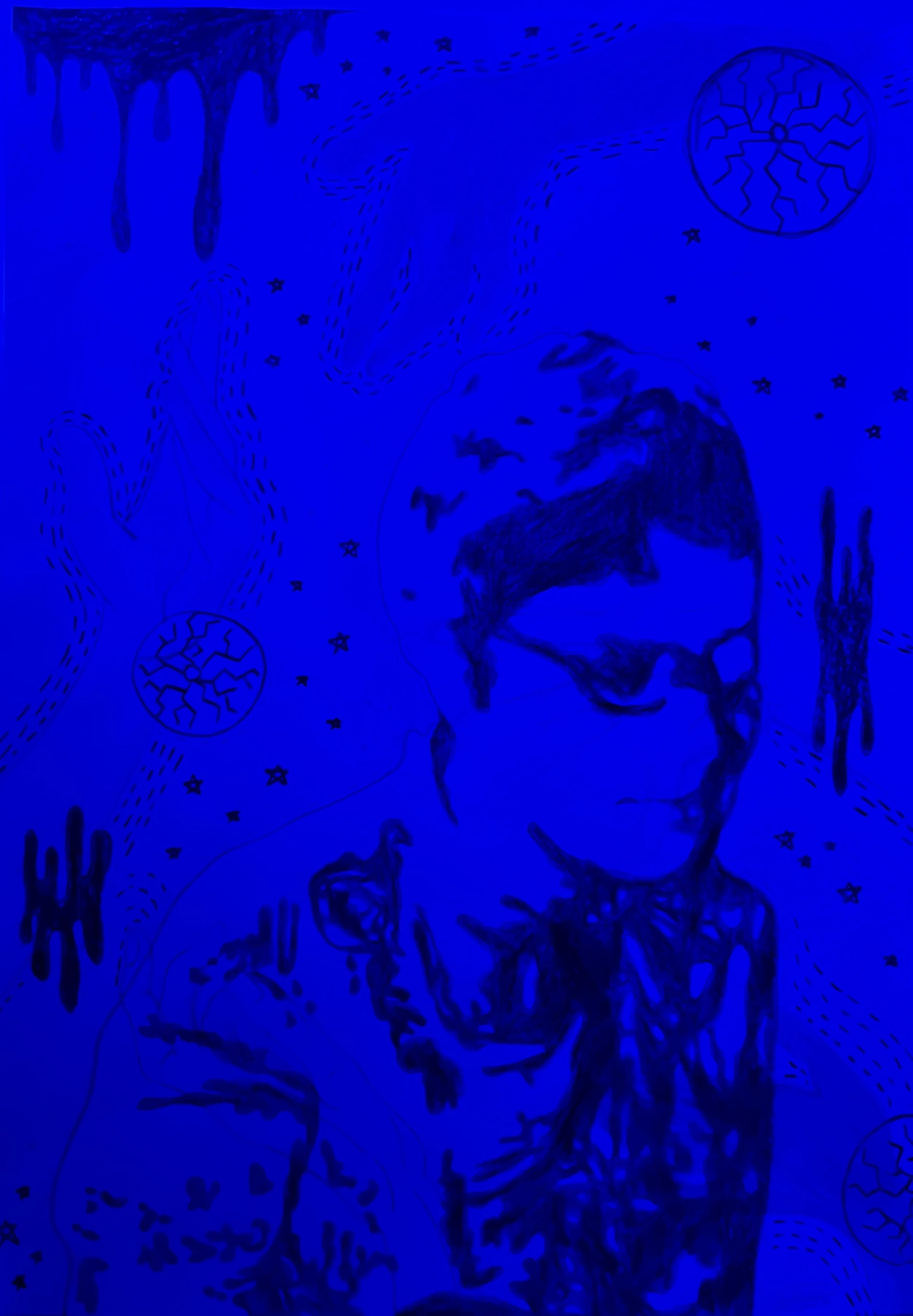
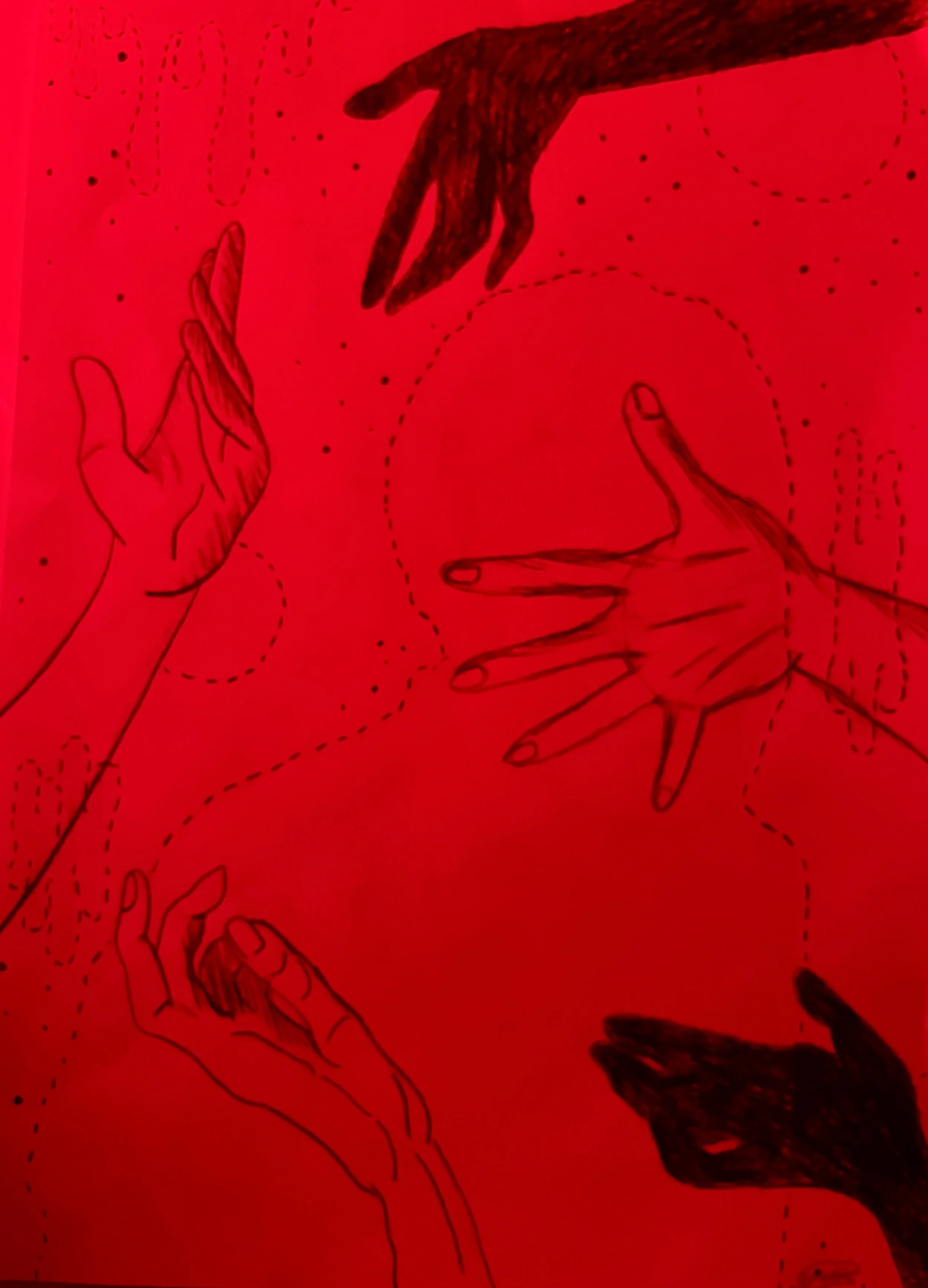
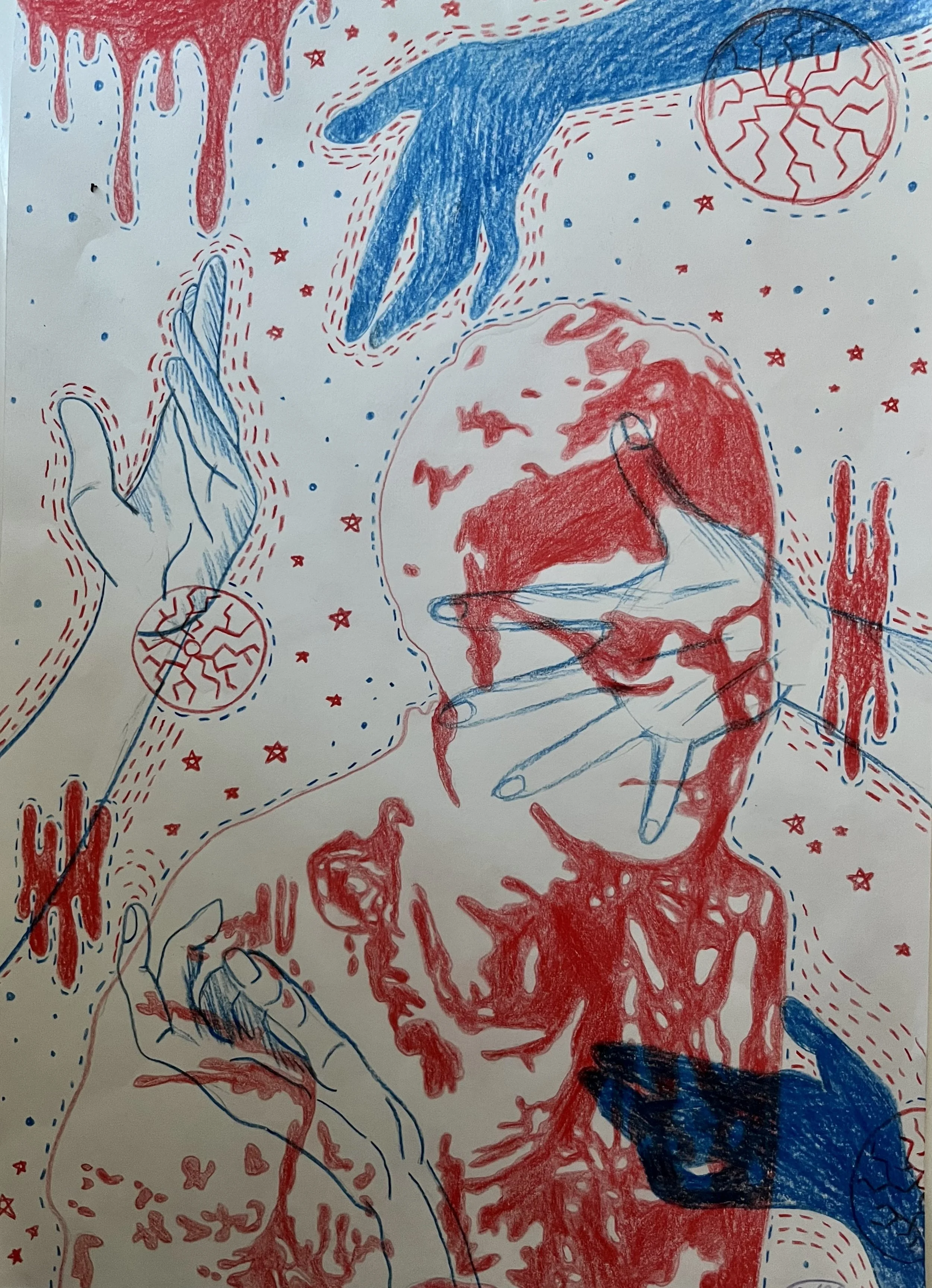
(un)detectable
The artwork is inspired by the nature of dark matter; how it is essentially undetectable and how it doesn't interact with normal matter. The artwork shows mysterious objects and hands overlapping Vera Rubin (one of the leading scientists in dark matter). In normal light, everything can be seen. In blue light, only Vera and traces of dark matter are visible, and in red light, only clear, yet mysterious representations of dark matter are visible. This reflects how dark matter interacts with normal matter and the mystery around it.
Winning school for the most entries
Wenona School
High school student art competition
While we may not know exactly what Dark Matter is yet, we do know that light plays a big role in not only proving its existence but helping us uncover its mysteries. DESY’s “light through the wall experiment” ALPS II, as well as the SABRE South experiment, both rely on the production of light to signal contact with these mysterious particles.
Use what you’ve learnt from our website and any other resources and produce a unique and original artwork to represent your interpretation of a Dark Matter particle.
There are two year level categories for students to enter the competition and win prizes - details below!
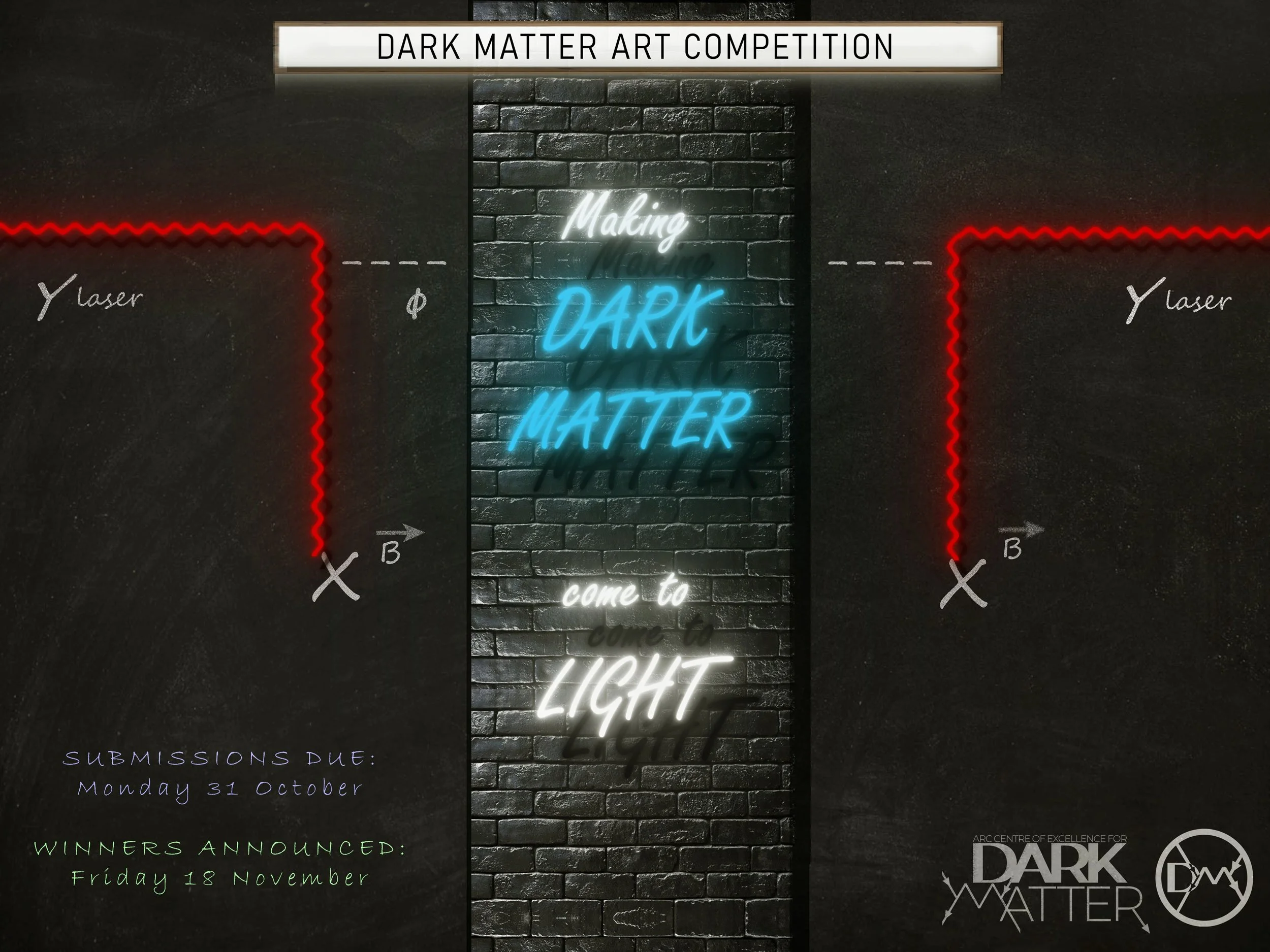
Submissions due Monday, 31st October 2022 (Dark Matter Day)
Email: Your submission to darkmatter-art@unimelb.edu.au along with your name, your year level, the name of your school, and a title and brief explanation (1-2 sentences) about the inspiration for your artwork
Eligibility: Entry is only open to individuals who, during the competition period, fall within one of the designated high school year level categories (Years 7, 8 and 9 or Years 10, 11 and 12) and current residents of Australia
Number of Entries: One entry per student
Winners: Will be notified directly and announced on Friday 18th November, 2022
Judging Criteria: Artworks will be judged by a panel on creativity and originality, paying close attention to the title and accompanying description
Prize Categories:
First Place: Overall best artwork in each year level category (Years 7-9 and Years 10-12)
Runner Up: One award in each year level category (Years 7-9 and Years 10-12)
Participation Award: for the high school with the highest overall number of entries
Competition Terms and Conditions
Competition Flyer
Some Dark Matter Resources:
Visit our website to learn more about Dark Matter: https://www.centredarkmatter.org/ and watch some cool videos here.