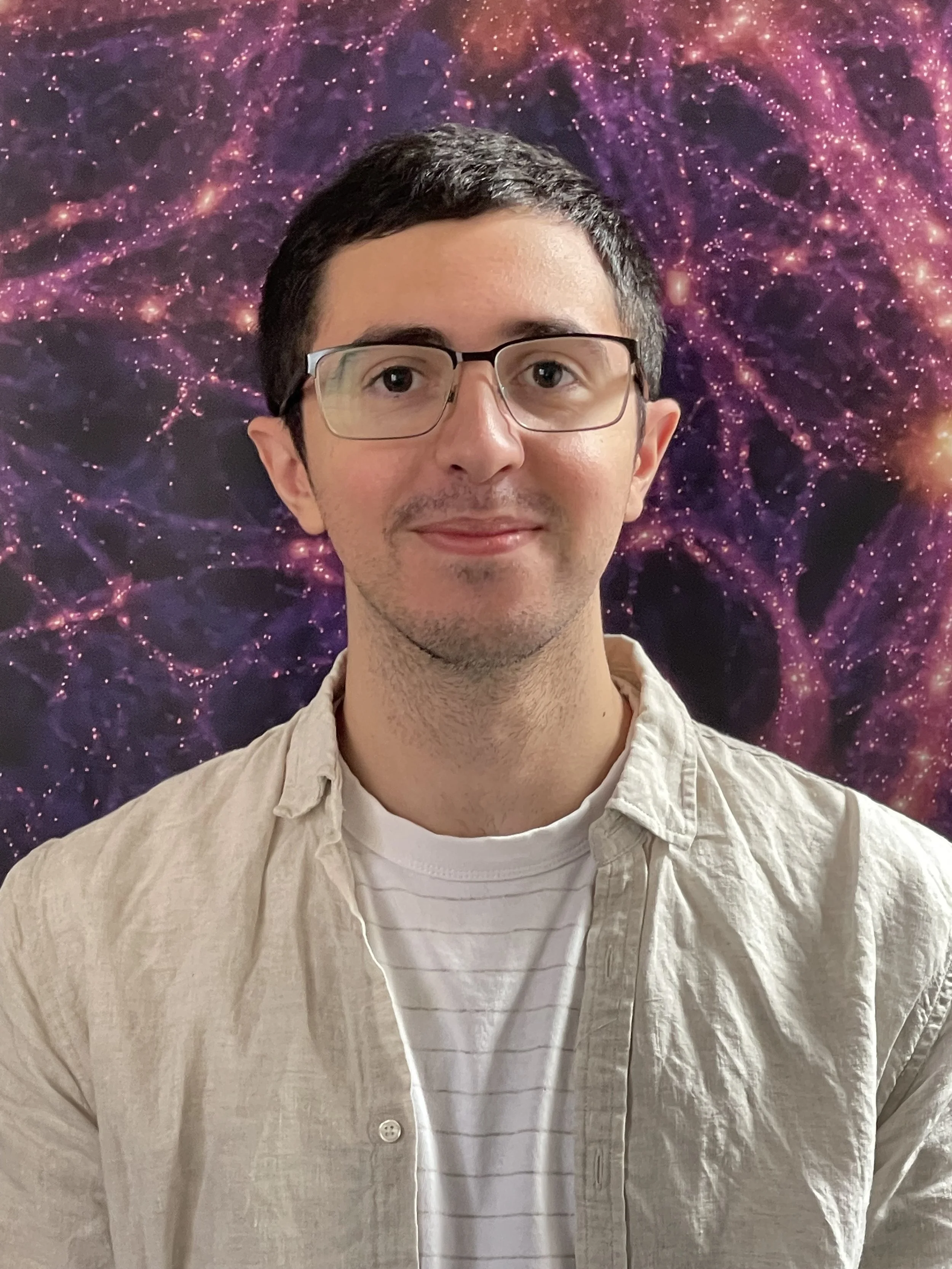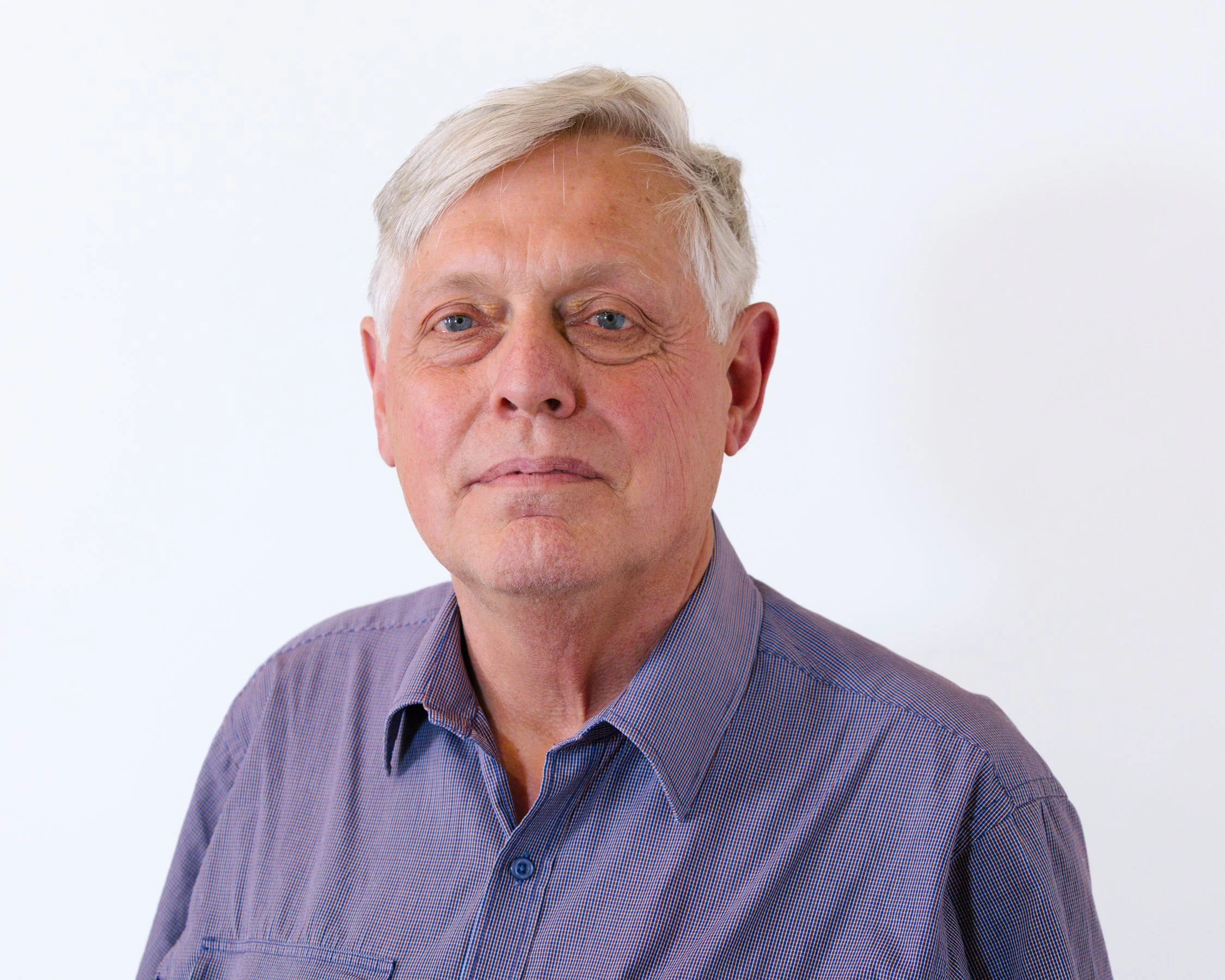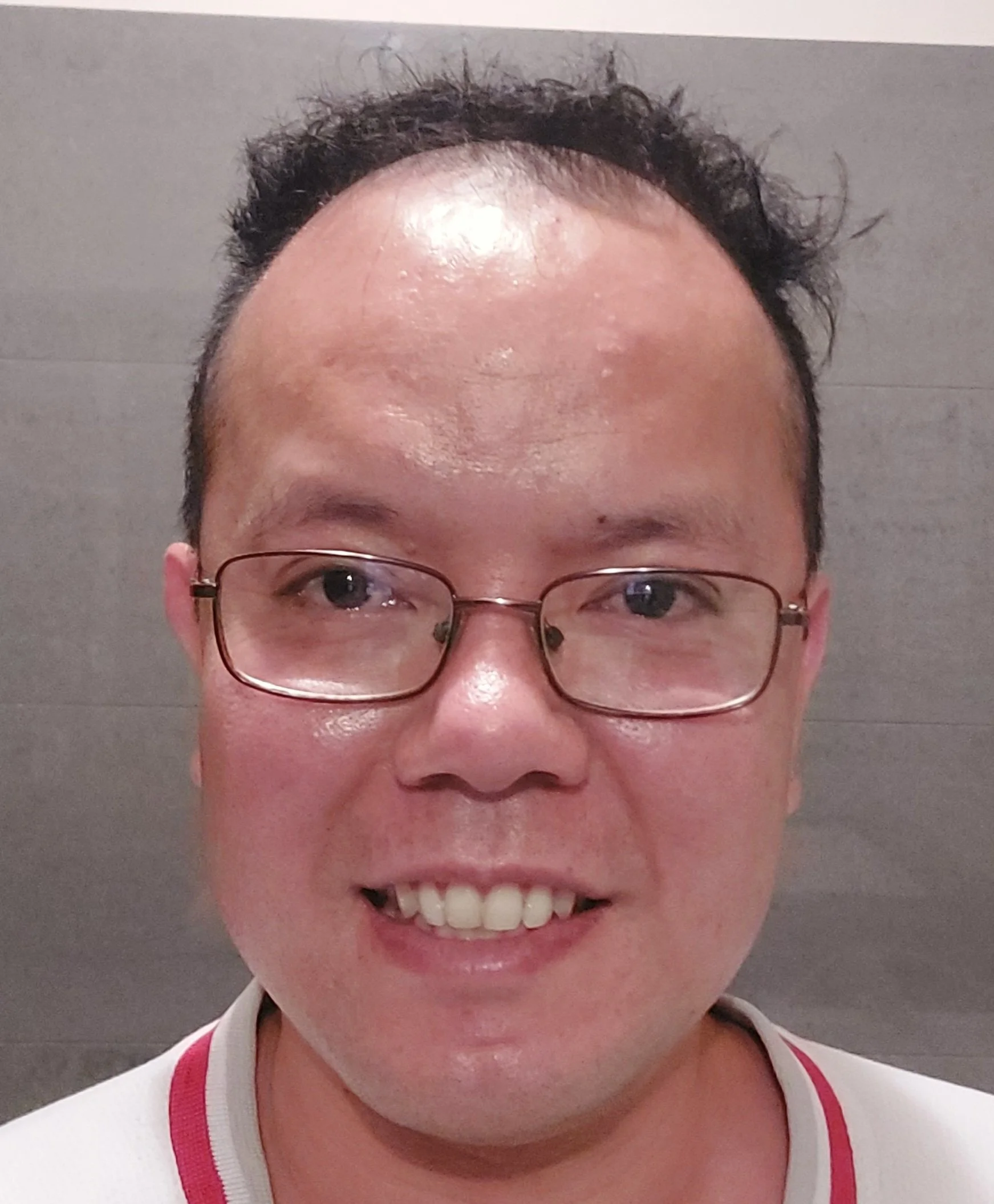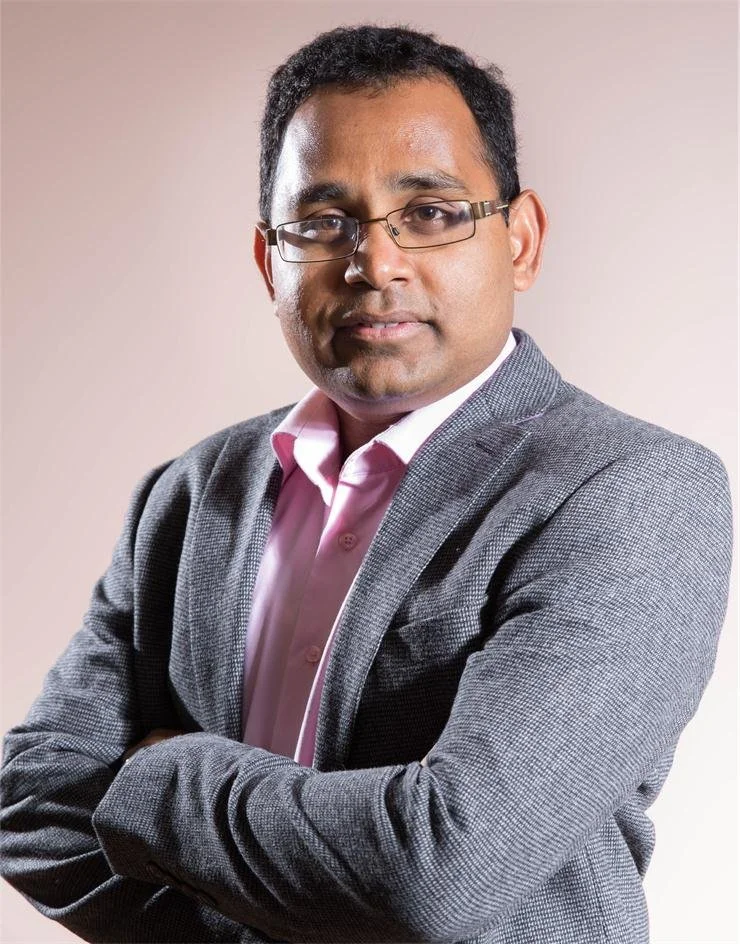
Pat Rajeev is a Professor in Civil Engineering at Swinburne University of Technology.
Read More
Pat Rajeev is a Professor in Civil Engineering at Swinburne University of Technology.
Read MoreGrace Lawrence’s area of research is direct detection, using simulations to study galaxy-scale dark matter distribution.
Read MoreBill’s area of research is in dark matter and Beyond the Standard Model physics, particularly multi-component dark matter interpretations to direct detection experiments.
Read MoreMatthew Fewell is a PhD student at the University of Adelaide, researching rare events in proton-proton collisions using the ATLAS detector at the Large Hadron Collider at CERN.
Read MoreJesper Leong’s research focuses on using QMC to describe the composition, structure and evolution of neutron stars. In addition, he is now applying the theory to describe the properties of finite nuclei in a hope of finding a more accurate explanation of how the elements of the periodic table behave.
Read MoreWanli Xing currently works in theoretical nuclear physics, in particular to understand nuclear structure from deep-inelastic-scattering processes.
Read MoreThomas Venville is a Honours Student working under the supervision of Professor Alan Duffy. Thomas’s research interests in the CDM focus on mapping and exploring dark matter density variations in the Milky Way Halo with both simulations and observational probes.
Read MoreDr Dipan Sengupta is an academic at the at the University of New South Wales working on fundamental theoretical particle physics. He was previously a research associate at the Centre’s Adelaide node.
Read MoreIrene is a Postdoctoral Researcher (Experimental), at the Adelaide Node.
Read MoreVictoria Millar is a Senior Lecturer in the Melbourne Graduate School of Education (MGSE).
Read MoreDr Robert Mostoghiu Paun has joined the Swinburne node of the Centre as a Postdoctoral Research Associate after finishing his PhD in 2020.
During his PhD, he studied the influence of baryonic physics in galaxy formation using both hydrodynamical simulations of clusters of galaxies and constrained simulations of the Local Group.
Read MoreProfessor Anton Wallner (HZDR) is the Head of the Department of Accelerator Mass Spectrometry and Isotope Research at Helmholtz-Zentrum Dresden-Rossendorf.
Read MoreSara Diglio is a CNRS researcher at the SUBATECH laboratory in Nantes, France. Her scientific interests range from particle and astroparticle physics to detector technologies.
Read MoreMaurizio Toscano is a Senior Lecturer in the Melbourne Graduate School of Education (MGSE) at the University of Melbourne.
Read MoreJan van Driel is a Professor of Science Education and co-leader of the Mathematics, Science & Technology Education Group in the Melbourne Graduate School of Education (MGSE) at the University of Melbourne.
Read MoreDan Hooper is the head of the Theoretical Astrophysics Department at Fermilab and a Professor of Astronomy & Astrophysics at the University of Chicago.
Read MoreProfessor Darren Croton is a theoretical and numerical astrophysicist, focusing on the formation and evolution of galaxies, the role of dark matter and dark energy, and the large-scale structure and cosmology of our Universe, using both supercomputer simulations and large observational data sets.
Read MoreJustin Leontini is an associate professor in Mechanical and Product Design Engineering at Swinburne University of Technology.
Read MoreGiulia Milana’s research area is structural engineering applied at dark matter physics experiment.
Read MoreAdam Ussing is a PhD student at Swinburne University working with Darren Croton and Alan Duffy. His research is focused on using N-body simulations to simulate different dark matter models. These simulations are then implemented in galaxy evolution models to determine the observable effects of the changes in the dark matter models.
Read More